
Future Tournaments to Watch Out For in India: The 2026 Pickleball Calendar
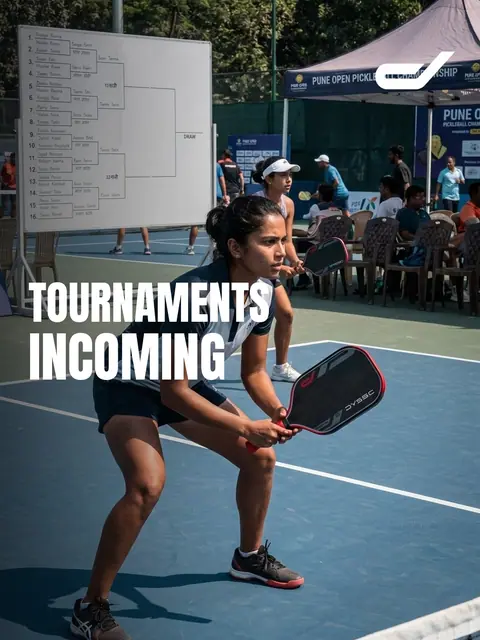
India's tournament calendar has gone from a handful of club round-robins to a genuinely crowded schedule in under three years. For the first time, an amateur player in Pune or Hyderabad can plan a full competitive season without leaving the country — and a serious one can chase ranking points that travel internationally.
Here is what is worth tracking, how the events differ, and what you need in place before entries open.
The franchise leagues: pickleball's IPL moment
The World Pickleball League (WPBL) launched its debut season in Mumbai and immediately changed how the sport is packaged in India — franchise teams, mixed-gender squads, imported pro talent and broadcast coverage. Expect subsequent seasons to expand the number of teams and add host cities beyond Mumbai.
What this means for you as a club player: franchise leagues are not open-entry, but they run feeder trials and combines in host cities, usually announced 6-10 weeks before the season. Teams scout from those trials and from high DUPR ratings on the domestic circuit. If a league season is announced for your city, the trial is your entry point.
Watch also for regional franchise formats — several state-level leagues in Maharashtra, Telangana and Gujarat have run pilot seasons with corporate backing. These are far easier to break into than the national league.
National championships and the governing-body question
This is the part most players get wrong, so read carefully. India currently has more than one body claiming national authority over pickleball, and each runs its own "National Championship." Before you pay an entry fee, check three things:
- Which body sanctions the event — and whether that body's rankings are recognised by the international federation you care about
- Whether results feed into DUPR, which is now the de facto rating currency for selection into leagues and invitationals
- Whether the event is a qualifier for an Asian or world championship squad, or purely a standalone title
National championships typically run in the October-to-February window, when Indian courts are playable through the day. Entry usually requires registration with a state association, so join yours early — state affiliation paperwork is the single most common reason players miss deadlines.
The DUPR-rated city circuit
For most readers, this is the real calendar. A rolling series of open tournaments in Mumbai, Bengaluru, Delhi NCR, Hyderabad, Chennai, Pune, Ahmedabad and Chandigarh now run near-continuously, most of them DUPR-rated and bracketed by skill level (2.5, 3.0, 3.5, 4.0+) rather than age or club membership.
Why these matter more than the glamour events:
- You play people your level. A 3.0 bracket is a genuinely winnable draw, not a first-round exit
- Your DUPR moves. Rated results are what get you invited to higher-tier events and league trials
- Frequency. You can play six to ten of these a year without long travel, which is how ratings actually improve
Track them through the tournament listings inside the DUPR app, your city's club WhatsApp groups, and the venue operators themselves — most large indoor facilities now host their own quarterly open. Our broader guide to pickleball in India covers where the courts and communities are concentrated.
International events on Indian soil
Two categories to watch. First, Asian-region championships and continental cups, which have rotated hosts and where an India leg is a live possibility given the growth of infrastructure here. Second, international pro tour expansion — the major American tours have publicly signalled interest in Asian stops, and India's court count and sponsor appetite make it a credible candidate.
These bring qualifying draws and, more usefully for club players, pro-am and amateur brackets running alongside the main event. If a tour stop lands in your city, the amateur draw is the best value competitive experience you will get all year.
How to actually be ready when entries open
Entries for the better-run Indian events close fast, sometimes within 48 hours for popular brackets. Practical preparation:
- Create and claim your DUPR profile now. Unrated players get dumped into the wrong bracket or waitlisted
- Register with your state association if you intend to play sanctioned nationals
- Find a fixed partner for doubles and enter as a pair — solo entries are usually processed last
- Check the paddle rule. Most sanctioned Indian events now require a USAPA/USAP-approved paddle, and referees do check at higher-level draws
On that last point: turning up with a non-compliant paddle at check-in is an avoidable disaster. Our USAPA approved explainer covers exactly what the stamp means. If you are still choosing, the best pickleball paddle in India comparison breaks down the options by playing style, and the DYSSC HexCore Pro is built to the approved spec with a raw carbon face that holds up across a five-match tournament day.
A realistic first season
If you have never played a tournament, do not start at a national championship. A sensible progression looks like this:
- Two local DUPR-rated events in your correct skill bracket, doubles only
- One larger city open once your rating stabilises
- A state-level or sanctioned event in the winter window
- League trials, if your DUPR is trending toward 4.0+
Tournament pickleball punishes different weaknesses than social play — mainly your ability to absorb pace under pressure and get back to the kitchen. Spend the weeks before your first draw on drills that improve you fast rather than on new gear.
The calendar is filling up. The players who benefit are the ones registered, rated and ready before the entry link goes live.
Frequently asked questions
Do I need a DUPR rating to enter tournaments in India?
Not always, but it helps enormously. Most city opens and league trials now bracket players by DUPR, and unrated entrants are often waitlisted or placed in the wrong skill draw. Create a profile and get a few rated results logged before you target bigger events.
Is a USAPA-approved paddle mandatory at Indian tournaments?
At sanctioned and higher-tier events, yes — equipment is checked at the desk and non-compliant paddles are refused. Casual club tournaments are looser, but buying an approved paddle from the start means you never have to replace it to compete.
Keep reading



Comments (0)
Be the first to comment.