
Pickleball vs Tennis vs Badminton: Why India's Racquet Players Are Switching
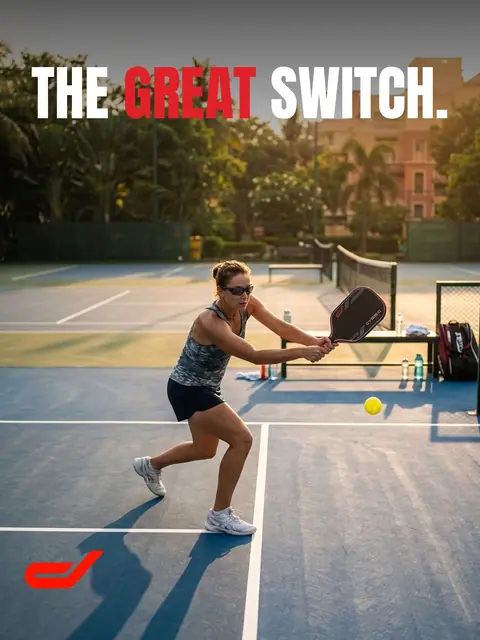
India has always been a racquet-sport country. Tennis gave us Leander Paes and Sania Mirza; badminton gave us PV Sindhu and Lakshya Sen. But walk into any urban sports complex in 2026 and you'll hear a different sound — the sharp pop of a pickleball off a carbon-fibre face. The players making that sound? A striking number of them held a tennis racquet or badminton racket first.
The Numbers: A Crossover Sport by Design
Pickleball's growth story is largely a migration story. In the US — the sport's biggest market and the best-documented one — the Sports & Fitness Industry Association (SFIA) has named pickleball the fastest-growing sport for multiple consecutive years, with participation growing over 200% in three years. What's more telling is where those players came from:
- Industry surveys (APP and SFIA data) consistently show that roughly one in three new pickleball players has a tennis background, making tennis the single largest feeder sport.
- Badminton and table tennis players form the next biggest cohort — their soft hands, wrist control and net instincts translate almost directly to the kitchen game.
- The APP has estimated that a significant share of casual tennis players now play pickleball as often as or more often than tennis.
India is following the same pattern, just faster. The Indian Pickleball Association and state bodies estimate the country's active player base has grown from a few thousand in 2022 to well over 50,000 players across 100+ cities, with courts multiplying in Mumbai, Bengaluru, Delhi NCR, Hyderabad and Pune. Coaches at Indian academies routinely report that half or more of their new adult sign-ups are former tennis or badminton players. We've covered this boom in detail in our guide to pickleball in India and our 2026 deep-dive on where the sport is heading.
Head-to-Head: How the Three Sports Compare
Court size and coverage
- Tennis: 78 ft x 36 ft (doubles). Enormous ground to cover; rallies punish slow movers.
- Badminton: 44 ft x 20 ft, but with constant lunging, jumping and overhead smashing.
- Pickleball: 44 ft x 20 ft — badminton's footprint — but played at ground level with an underhand serve and the two-bounce rule slowing the start of every rally.
Physical demand
Tennis is brutal on shoulders and knees; badminton is arguably the most explosive racquet sport on the planet, hammering ankles and Achilles tendons. Pickleball keeps the reflexes and strategy while cutting the sprinting and jumping dramatically. That's exactly why players aged 35+ — the group most likely to drift away from tennis and badminton — are pickleball's fastest-growing segment.
Learning curve
A tennis beginner needs months before rallies feel fun. A badminton beginner needs serious wrist technique. A pickleball beginner is having competitive rallies within one session. Yet the ceiling stays high — dinking wars, third-shot drops and speed-ups give former competitive players plenty to master.
Cost and access in India
- Tennis: expensive coaching, scarce courts, racquets from ₹8,000+ and frequent restringing.
- Badminton: affordable but indoor-court dependent, with peak-hour slots hard to book in most metros.
- Pickleball: courts fit into converted badminton halls, terraces and society compounds, and one quality paddle lasts years with no strings to replace.
Why the Switch Sticks
- Instant competence, lasting challenge. Tennis converts keep their groundstroke mechanics; badminton converts keep their hand speed at the net. Both feel good on day one.
- Longer playing life. Players who quit tennis at 45 are competing in pickleball tournaments at 60.
- Social density. Doubles-first culture and small courts mean four friends, one hour, dozens of games.
- A real competitive pathway. With DUPR ratings, national tournaments and city leagues, converts get the competition they miss.
Making the Switch? Get the Gear Right
The biggest equipment mistake converts make is treating a paddle like a racquet. Tennis players tend to over-swing; badminton players under-hit flat balls. A paddle with a large sweet spot and genuine spin grip smooths both transitions. The DYSSC HexCore Pro — a USAPA-approved carbon-fibre paddle — is built exactly for this crossover: enough pop for former tennis hitters, enough touch for badminton-trained hands at the kitchen. If you're comparing options, our guide to the best pickleball paddle in India breaks down what actually matters, and our first-paddle buyer's guide will get you started in ten minutes.
The Bottom Line
Tennis and badminton aren't going anywhere — they built India's racquet culture and still own its elite pathways. But the data is unambiguous: when recreational players want more games, fewer injuries and faster fun, they're picking up a paddle. If you've spent years on a tennis baseline or a badminton court, you're not starting from zero. You're starting with an advantage.
Frequently asked questions
Is pickleball easier than tennis or badminton?
It's easier to start — beginners rally competitively in their first session thanks to the smaller court, underhand serve and slower ball. But at higher levels, dinking battles, third-shot drops and fast hands make it just as demanding strategically.
Do tennis and badminton skills transfer to pickleball?
Yes, strongly. Tennis players bring groundstroke mechanics and court sense; badminton players bring net reflexes and soft hands. Industry surveys show roughly a third of new pickleball players come from tennis, with badminton and table tennis close behind.
Comments (0)
Be the first to comment.