
Pickleball Elbow: Prevention, Causes, and the Best Gear for Recovery
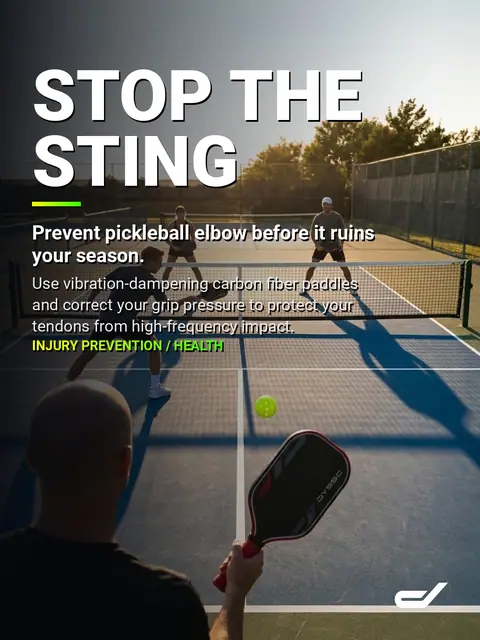
As the popularity of pickleball in India continues to soar, so does a common complaint among players: a sharp, nagging pain on the outside of the elbow. Often referred to as 'Pickleball Elbow'—a variation of lateral epicondylitis or tennis elbow—this condition can sideline even the most dedicated athletes for months if left unaddressed.
While the sport is lower impact than tennis, the repetitive nature of the swing, the hardness of the ball, and the vibration of the paddle can create a perfect storm for tendon inflammation. In this guide, we will break down why this injury happens, how your choice of equipment matters, and the steps you can take to stay on the court.
What Causes Pickleball Elbow?
Pickleball elbow is an overuse injury of the extensor tendons that attach to the lateral epicondyle (the bony bump on the outside of your elbow). These muscles are responsible for extending your wrist and fingers. When you strike a pickleball, the force of the impact travels through the paddle, into your hand, and up your forearm.
Several factors contribute to this strain:
- Improper Grip Pressure: Many players, especially beginners, suffer from the 'death grip.' Squeezing the handle too tightly prevents the muscles from absorbing shock, sending the vibration directly into the tendons.
- Leading with the Elbow: On backhand shots, many players lead with their elbow rather than their shoulder and core. This puts immense torque on the joint.
- Paddle Vibration: Low-quality paddles or those with stiff, hollow cores do a poor job of dispersing energy. This 'sting' on impact is a leading cause of micro-trauma in the forearm.
- The Weight Factor: A paddle that is too heavy strains the muscles, while a paddle that is too light requires the player to swing harder to generate power, also leading to fatigue.
How Your Paddle Choice Protects Your Joints
If you are already feeling the early signs of soreness, your first move—after rest—should be evaluating your gear. Not all paddles are created equal when it comes to arm health.
The DYSSC HexCore Pro is engineered with a multi-stage thermoformed construction and a Toray T700 Raw Carbon Fiber face. Why does this matter for your elbow? Carbon fiber is naturally better at dampening high-frequency vibrations than fiberglass or cheaper composite materials. The 'HexCore' technology acts as a shock absorber, diffusing the energy of a 50mph drive before it reaches your wrist.
When searching for the best pickleball paddle in India, players dealing with injury should prioritize 'plush' or 'control' paddles. These typically feature a 16mm core, which offers a softer feel and more vibration absorption than thinner, stiffer 13mm models.
Technique Adjustments to Save Your Arm
Beyond gear, how you play determines how long you stay healthy. You must address the mechanics of your swing to ensure long-term recovery.
Relax Your Grip
On a scale of 1 to 10, your grip pressure during a dink should be around a 3 or 4. Even on drives, you should rarely exceed a 7. Learning how to hold a pickleball paddle correctly—using a continental or eastern grip—can help distribute the force more evenly across the palm.
Use Your Large Muscle Groups
Power should come from your legs and core, not your wrist. When hitting a groundstroke, step into the ball and rotate your torso. If you find yourself 'flicking' the ball with your wrist, you are asking for an injury. This is especially true for the backhand; ensure you are swinging from the shoulder with a firm (but not locked) elbow.
Recovery and Strengthening for Indian Players
In the humid Indian climate, sweat can cause your hand to slip, leading you to subconsciously grip harder. Using high-quality overgrips that wick away moisture is a simple but effective preventive measure.
If you are already in pain, follow these recovery steps: Rest and Ice: Continuing to play through sharp pain will only turn a 2-week recovery into a 6-month chronic issue. Ice the outside of the elbow for 15 minutes after any activity. Strengthening Exercises: Once the acute pain subsides, focus on eccentric strengthening. The 'Tyler Twist' using a rubber bar or simple wrist curls with a light dumbbell can rebuild the tendon's resilience. Warm-Up Properly: Never walk onto the court and start smashing overheads. Check out our guide on pickleball warm-up and injury prevention to learn dynamic stretches that prepare your tendons for play.
Conclusion
Pickleball elbow doesn't have to be a permanent part of your sporting life. By combining the right equipment—like the vibration-dampening DYSSC HexCore Pro—with disciplined technique and a proper warm-up routine, you can neutralize the strain on your joints. Pay attention to the warning signs: a little rest today is better than a long layoff tomorrow. Stay fluid, stay relaxed, and keep your game pain-free.
Frequently asked questions
Can a heavy paddle cause pickleball elbow?
Yes, a paddle that is too heavy can strain the forearm muscles. However, a paddle that is too light can also cause issues because it requires more effort to generate power. Most players find a balance with a mid-weight paddle (7.8–8.2 oz).
How do I know if I have pickleball elbow?
Common symptoms include tenderness on the outer side of the elbow, pain when shaking hands or turning a doorknob, and a weak grip strength.
Should I wear a brace for pickleball elbow?
A counterforce brace can help by compressing the extensor muscles and distributing pressure, but it is a temporary fix that should be used alongside technique correction and strengthening.
Keep reading
Comments (0)
Be the first to comment.