
Mastering the Pickleball Serve: Turn Your Start into an Offensive Weapon
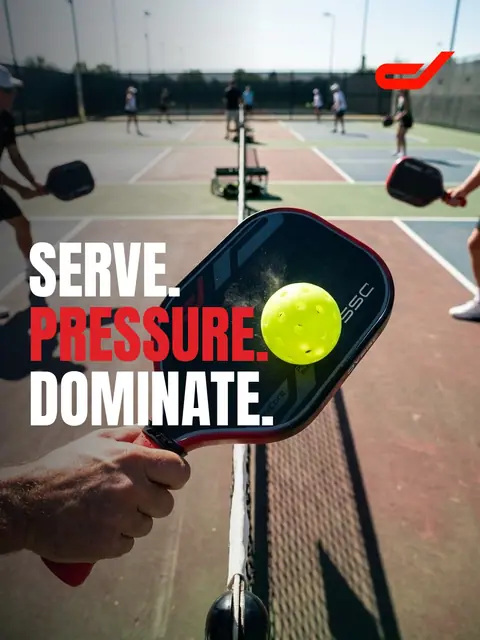
In the early days of pickleball, the serve was viewed merely as a way to start the point. The old-school philosophy was simple: get the ball in, keep it deep, and wait for the third-shot drop. However, as the game has evolved into a faster, more aggressive sport, the serve has transformed. For competitive players in India, the serve is no longer just a formality—it is the first opportunity to dictate the pace and pressure of the game.
A weak serve allows your opponent to hit a punishing return, putting you on the defensive immediately. Conversely, a heavy, well-placed serve can force a short return or a direct error. To elevate your game, you must move beyond the 'just get it in' mentality and start treating the serve as a weapon.
The Fundamentals of a Legal Serve
Before diving into advanced tactics, it is critical to ensure your serve is fundamentally legal under the 2026 USAPA standards. A serve that gets called out for a technicality is a wasted point. There are three primary requirements for a standard volley serve:
- The Motion: The server’s arm must be moving in an upward arc at the moment of impact.
- The Contact Point: The ball must be struck below the waist level (the navel).
- The Paddle Head: The highest point of the paddle head must be below the highest part of the wrist when the ball is hit.
Alternatively, players can use the 'drop serve,' where the ball is dropped from any height and allowed to bounce before being struck. While the drop serve eliminates the restrictions on the upward arc and waist height, most advanced players prefer the volley serve because it allows for more pace and a more aggressive contact point.
1. Depth: Your Primary Objective
If you only focus on one thing during your serve, let it be depth. A deep serve—landing within a foot or two of the baseline—is the most effective way to keep your opponent back. When a returner is forced to hit from deep in the court, they have a harder time moving forward to the kitchen line. This buys you and your partner more time to prepare for the third shot.
Many players make one of the most common 9 beginner pickleball mistakes by serving too short, which allows the opponent to step into the court and hit a rolling return that puts the serving team under immediate pressure.
2. Generating Power through Biomechanics
Power does not come from the wrist; it comes from the ground up. To generate significant pace on your serve, you need to engage your entire body. Start with a stable, athletic stance with your weight on your back foot. As you swing, shift your weight forward into the ball, rotating your hips and shoulders.
A common mistake is using a 'poking' motion with the arm. Instead, think of the serve like an underhand toss in cricket or a softball pitch. The follow-through should be long and directed toward your target. Using a high-performance paddle like the DYSSC HexCore Pro provides the necessary stability and energy transfer to ensure that your physical effort translates into maximum ball speed without losing control.
3. Adding Spin to Disrupt Rhythm
While depth and power are the foundations, spin is what makes a serve truly dangerous. By brushing up on the back of the ball at the moment of impact, you can create topspin. Topspin serves dive into the court and kick upward and forward after the bounce, forcing the returner to deal with a ball that is constantly moving away from them.
If you want to master this, learning how to add more spin involves understanding the friction between the ball and your paddle face. The T700 Toray Carbon Fiber surface of the DYSSC HexCore Pro is specifically designed to grip the ball, allowing for the maximum RPMs (revolutions per minute) allowed under tournament regulations.
4. Strategic Placement: Targeting Weaknesses
A fast serve is great, but a smart serve is better. Always observe your opponent’s positioning and tendencies. Most players have a weaker backhand return. Serving deep to the backhand corner is the 'bread and butter' strategy of high-level pickleball.
However, don't be afraid to mix it up. If you notice an opponent is cheating toward the centerline to protect their backhand, serve out wide to the sideline. This forces them to move laterally, making it much harder for them to hit a controlled return. This 'corner-to-corner' strategy keeps your opponents off-balance and prevents them from getting comfortable.
5. The Change-up: The Lob Serve
In India’s outdoor courts, wind and heat can drastically change how a ball behaves. Sometimes, the most effective serve is not a rocket, but a high, deep lob. A lob serve changes the 'look' of the ball for the returner. It forces them to generate all their own power and can be particularly frustrating for aggressive 'bangers' who want to use your pace against you.
Use the lob serve sparingly as a change-up. When your opponent expects a hard drive, a high-arcing ball that lands near the baseline can cause a mistimed swing and a weak return.
Routine and Mental Consistency
The serve is the only shot in pickleball where you have total control. You are not reacting to a ball sent by your opponent; you are starting the action. This makes a pre-serve routine essential. Whether it is two bounces of the ball or a specific deep breath, a consistent routine settles your nerves and prepares your muscles for the swing.
In a high-stakes match, consistency is king. It is better to have a serve that is 85% power and 100% consistent than a serve that is 100% power but only lands in 60% of the time. Use your warm-up time to dial in your range and find the rhythm that works for your body and your paddle.
Summary of Best Practices
To turn your serve into a tactical advantage, follow these steps:
- Aim for the back third of the court. Depth is more important than speed.
- Focus on the backhand. Most players are less comfortable hitting backhand returns on the move.
- Use your core. Power starts in the legs and hips, not the wrist.
- Vary your pace. Use topspin, drives, and the occasional lob to keep returners guessing.
- Trust your gear. A paddle with a grit-textured face like the HexCore Pro will help you execute advanced spin serves with confidence.
By mastering these techniques, you move from simply starting a point to actively winning it. Next time you step onto the court, don't just serve the ball—attack with it.
Frequently asked questions
Can I hit the ball above my waist during a serve?
Only if you are performing a 'drop serve.' For a standard volley serve, contact must be made below the waist (navel level).
What is the best place to aim my serve?
The most effective target is generally deep toward the opponent's backhand corner, as this is typically the weakest return for most players.
Why is my serve landing short?
Short serves usually happen due to a lack of follow-through. Ensure your paddle swing continues upward and forward toward your target after hitting the ball.
Keep reading
Comments (0)
Be the first to comment.